
Two Books about Relationships
"What is Love" by Kakuta Mitsuyo; "During the Rains" by Nagai Kafū

I find romance to be a discouraging topic of discussion. I dread advising friends on the subject. I admit to being the kind who listens to a predicament for only as long as it takes me to suss out what it is they want to hear, then quickly dispense the sought-for sagesse and get on with my life. As far as I can tell this category of feeling is really a self-constructed fate, there’s nothing anyone can say to pull you out of a headlong collision with heartbreak, and if you ever make it to the point of happiness, well, odds are you don’t really know how you got there. I’m not much of a theorist by any measure, and when it comes to love I find myself particularly suspicious of strategy and prefigured attitudes. My feeling towards romance is not unlike that of a jungle expeditioner coming face-to-face with a leopard – keep your head down, try not to make eye contact, wait for it to pass.
But I like to read about love. And when I write about books I often find myself writing about their portrayal of love, or the lack of a portrayal of love, or the author’s love for the subject and how it gives birth to an extraordinary sense of style. I used to think that all literature was about two things, love and death, and while I’m not certain this is a useful insight that bears much repeating it probably holds up better than most generalizations.
Given the Valentine’s season, and with willful ignorance of the holiday’s artificiality, I dug out a couple of relationship-adjacent Japanese novels I bought a while back and gave them a read. Generally Japanese literature presents a view of romance which, reflecting wider cultural differences, lies in contrast with the Western view. There is quite a lot of obsession, perhaps less romantic salvation. Romantic love isn’t played as a religious allegory as often as it is in Christian-inflected cultures; more often love is decidedly something which occurs on this earth and is bounded by the span of a person’s lifetime and material circumstances. Love is commonly portrayed as just another part of the “bridge of dreams” Murasaki Shikibu believed humans traversed on the way from cradle to grave. Romantic love between individuals tends to be seen as a bittersweet side-effect of humanity’s short-sightedness.
These novels, however, are the products of individual talents with individual perspectives writing in a post-isolationist Japan. They cut their own silhouettes.
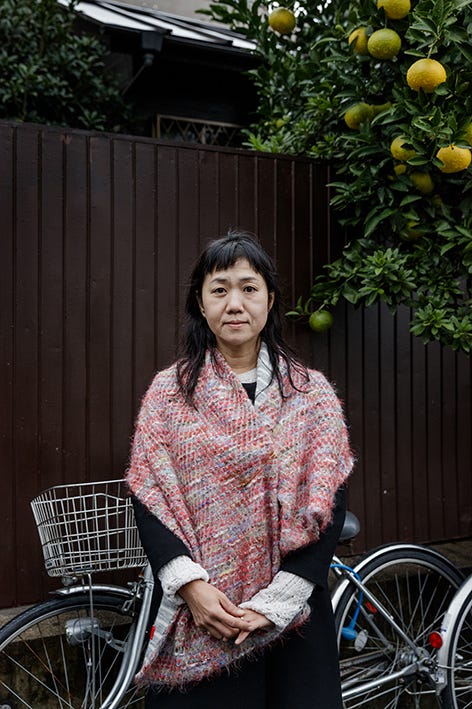
Only two of Kakuta Mistuyo’s novels and a handful of her short stories, consigned to back issues of lit mags, have been translated into English. But she holds an unquestionable amount of influence in the Japanese literary world. Born in Kanagawa in 1967 and publishing novels and short stories since 1990, she is the winner of many of Japan’s most prestigious literary awards, including the Naoki Prize (equivalent in weight to the Akutagawa, but awarded to novels in the Japanese tradition of popular literature). Her books have received critical as well as commercial success. Her modern translation of The Tale of Genji, issued in brightly-colored volumes with Matisse-like illustrations on their covers, is the most common version at the moment and is available in any Japanese bookstore.
But I bought What is Love (愛がなんだ) without having any idea of her contributions to the contemporary landscape. I was drawn in by the curious juxtaposition of the book’s cutesy-colloquial title and its cover, which indicates it as part of Kadokawa’s modern classics series (other authors in the series include Sōseki, Ōgai, and Miyazawa Kenji). The summary on the back promised a dark. seemingly eccentric tale of romantic obsession, a “full-speed sprint of an unrequited love story”.
Kakuta’s interest in unrequited love probably prefigures her interest in translating the Genji. The difference between various characters’ experiences of love, their expectations and their willingness to sacrifice, not to mention the frank, unironic tone set by the title, puts the novel comfortably inside of a woman-dominated Japanese literary tradition that can be traced back to Murasaki Shikibu.
But the darkness and eccentricity I expected from What is Love, which would have fit into the Genji line just as well as its cartographic sensibility, does not appear. The combination of a relatively common subject for melodrama with a fresh, relaxed, and unhurried voice sets What is Love apart. Narrated by the 28 year-old office worker Teruko, it tells the story of her relationship with Mamo-chan, an acquaintance from a singles’ party with whom she shares an on-again, off-again dalliance. The one-sidedness of their arrangement – Teruko cooks meals for him when he is sick, meets him at the drop of a dime, and never complains about his lack of any definite commitment to their relationship – escalates to the point that Teruko is fired from her corporate job after he invites her on a date during a work day.
Her friend Youko is not the least bit supportive of Teruko’s loyalty to Mamo-chan, referring to him as an oresama otoko, a self-centered man. Kakuta sets out a plethora of reasons for Teruko to finally break and take some drastic, possibly unhinged revenge. While I read, I often wondered whether she would end by killing Mamo-chan, or taking her own life, or hatching some absurd plot against him. I know Heisei-era women novelists have opted for much more extreme endings than this. The absurd, explosive ending of the film adaptation of Confessions by Minato Kanae played on loop in the back of my mind, as did several scenes out of Kanehara Hitomi. But somewhere along the way I realized I had misjudged Kakuta and her protagonist. What is Love charts a far more subtle path through its melodrama. It is an exceptionally rare kind of love story, one in which, despite the disruptions to day-to-day life which any strong love is bound to bring, a sense of heightened normalcy, of peace and harmony, is maintained.
Early in the novel, when Youko chides her for giving Mamo-chan too much ground, Teruko confesses that, “for me, words like ‘yes-woman’ and ‘taking advantage’ don’t exist. The only words that do are ‘loving’ and ‘not loving’. [...] This is my personal view of relationships, of romance.” She is in some ways presenting an idealized version of herself here – Teruko spends much of the novel worrying about certain details of Mamo-chan’s behavior, so she cannot be as detached as this quote may suggest. But she gets there in the end, manages to carve out a realization of her idealized romantic self. Teruko is a disciple of the feeling of love, someone who leaves all final decisions to the heart and uses her head as little as possible, thoroughly refusing to see love as a power play. Long-term effects, and the strategizing required to attain these, do not matter so much as the simple joy of spending time with the person she loves or helping them in some small way.
Meanwhile for her friend, Youko, there is nothing so important in a relationship as making sure one comes out on top. Like many a rom-com bestie, Youko is forever ready to issue admonitions against Mamo-chan and his ilk, constantly campaigning for Teruko to come to the light and realize that all men are going to disappoint her, so she may as well get something nice – sex, money, fun – out of them in exchange (Teruko all but admits that Mamo-chan offers none of these). But Teruko knows that, despite Youko’s professed disdain for Mamo-chan, the two have essentially symmetrical approaches to love – similar to how Mamo-chan has no qualms about calling Teruko up to help him abide a lonely night, Youko ditches Teruko and a pseudo-boyfriend at her house on New Year’s Eve so that she can go partying. The difference between putting oneself first and being insensitive or hedonistic is not so easy to distinguish as Youko suggests.
The expected climax to What is Love, a dramatic confrontation with Mamo-chan resulting in Teruko’s self-liberation, are constantly teased but never fully play out. Teruko realizes rather early on that a decent, long-term relationship with him will not come to be, but unlike most people this doesn’t cause her to switch to a more pragmatic approach and begin to cut her losses. Teruko is an interesting character and a success, not because she is more complex or tormented than the average person, but because she is simpler. Teruko is just a lover, a lover in the most straightforward and perhaps even childish sense of the word. To her, love has nothing to do with being loved and everything to do with loving. Even when it is unenjoyable, even when it embarrasses her or makes her life feel balanced on a knife’s edge, she commits herself to it fully. Towards the end of the novel, a potential suitor of Youko’s meets with Teruko to tell her that he’s quitting his pursuit of Youko. He’s realized how she treats the people who love her, and has decided that he’s better off without her, no matter what he feels. But he struggles to put all this into words. Finally, as he gets into a cab to leave and Teruko realizes she’ll probably never see him again, she expresses his thoughts for him, albeit with a hint of accusation: “What you’re really saying is that you’re going to abandon the woman you love. [...] That since there’s nothing in it for you it’s stupid to keep on trying. You’re sick of it, loving without being loved.” He laughs and tells her she’s right.
Of course Teruko is only capable of saying all this because she has had these thoughts herself. And yet she isn’t opening up to the pseudo-boyfriend out of sympathy; it is frustration, a kind of righteous indignation which moves her in this moment. For Teruko, abandoning someone you love is a terrible sin. It is cowardly to give anything less than everything for love.
The novel threads the needle to a happy ending. Teruko’s sense of love does change from her original straightforwardness into something more nuanced and mature, but she never contemplates Youko’s way of life for herself and sticks with Mamo-chan to the end. What is Love ignores the didactic potential of its title and instead in the end presents the reader with another question: what isn’t love?
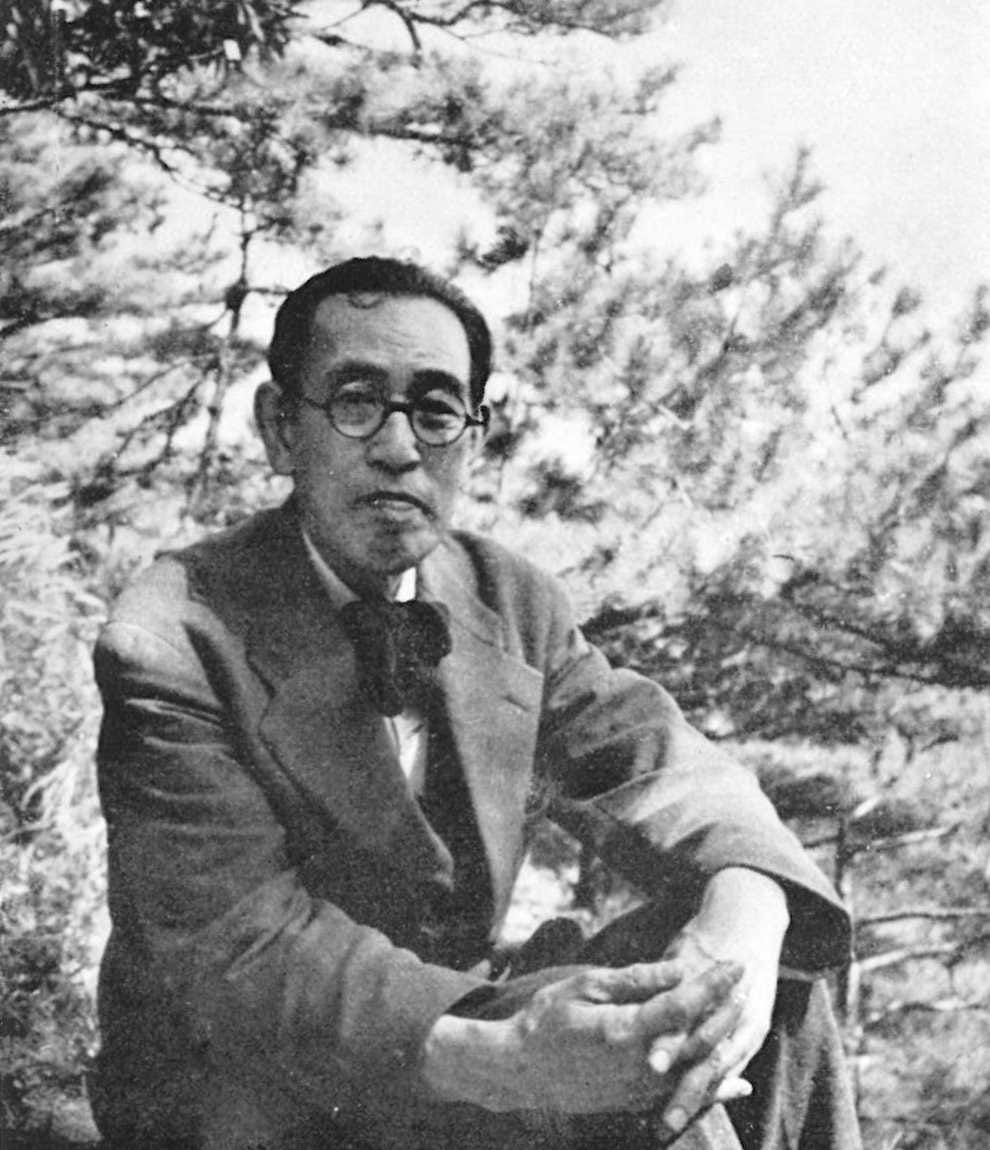
Nagai Kafū may well be the greatest Japanese ‘modernist’ to go virtually untranslated. As far as I can tell his last rendition into English was published in the ‘90s by a university press and copies now hover around the $70 mark. In Japanese criticism and scholarship, however, his name rolls into conversation accompanied by the likes of Sōseki, Akutagawa, and Tanizaki. Born in 1879 and dying in 1959, Kafū was a member of the first generation of Japanese citizens to be raised in a world which was no longer isolationist but increasingly attracted to the philosophy and politics of Europe. Kafū’s father studied abroad in the United States, and from a young age Kafū attended a Chinese language school and was taught English. His visits to America and France resulted in the straightforwardly titled American Stories and French Stories; he was a proponent of French Naturalism and translated Zola into Japanese.
Maybe it goes without saying that Naturalism is not known for the originality of its characters; I wouldn’t really know, I haven’t had that many conversations about Naturalism, but it really seems to be one of the fundamental aspects of the movement. The Naturalist writer is in many ways an opponent of individual interest. The illusion of a character as a unique soul who wills their decisions is denied and in place of this illusion is erected a very 19th-century image of a person as the sum of their environment and family. The belief is that any social phenomena can be broken down into its constituent parts and studied by the novelist, who reveals the true source of social ills. Naturalism is rather openly the aesthetic offspring of Marxism and Darwinism (its success in Meiji and Taisho Japan probably has more to do with this intellectual heritage, which was just as influential in 1920’s Japanese literature as it had been on 1890’s France, than translations of Zola and Maupassant). Owing to this background Naturalism has seen a decline in modern interest which contemporary movements such as Symbolism have suffered to a lesser extent.
The funny thing about Kafū is that, despite being a Naturalist, I haven’t yet come across anything in my reading about him which would indicate he ever put much stock in Darwin or Marx, or that he even read either of them. Frankly it seems to me that he gravitated towards the movement for a more straightforward reason – its reductive nature spoke to his natural-born cynicism.
A mediocre Naturalist will fail to see the sentimentality and melodrama hidden beneath the scientific veneer of their received aesthetic; a great one rather inverts the relationship between social determinism and melodrama, and instead of smothering it, ends by laying a colorful sheet of emotions out flat on top. During the Rains (つゆのあとさき) does this wonderfully, it’s plot shifting from character to character in successive chapters like in a soap opera where one tangential relationship leads to another leads to another, until a great spider’s web of love, hate, and ambition is knitted from the lives of very stereotypical people. In exchange for the cliches employed in making his characters Kafū is able to weave together a plot that brings together such a wide variety of life in such a short space that it very often feels ecstatic.
Set during Japan’s rainy season, During the Rains tells the story of a relationship as it is slowly manipulated to the point of extinction by jealousy. The main protagonist of the novel, Kimie came to Tokyo from a small village with dreams of making a colorful life for herself as a geisha, at first living with a friend who, by the time of the novel’s opening, has since left the city to work with a geisha troupe. While awaiting a similar break, Kimie continues clocking in at a “cafe” which doubles as an after-hours brothel and takes the days as they come, apparently enjoying her work and the variety of experience it offers her as she continues to fantasize about what else the city may have in store. Her lover Kiyoka is a hack novelist who rewrites 18th-century Edo-era stories and sells them to women’s magazines and movie studios. He is incredibly possessive of Kimie, despite having known about her line of work from the first. After he spies her at a park with an older man, he begins to plot her downfall. All the while Kimie is oblivious to his change in feelings.
During the Rains contains so many sideplots and passers-through that a full summary of the narrative and its cast would struggle to be as short as the novella itself. Kafū’s efficiency in telling this story is masterful, a pure joy, an exhibition of literature’s ability to create, in its form and structure, a kind of gossip more potent than the actual thing. The claustrophobic atmosphere of the titular rains, forcing characters into taxi cabs and seedy inns, choking the freshness out of the air and lending a haze to the neon-lit street where Kimie works, blends these characters into one other and, finally, merges them with the city itself. During the Rains is an exceptional Tokyo novel, its humid atmosphere trapping all the cities contradictions – its old temples and old men, as well as its self-destructive desire to model itself after a hallucinatory European ideal.
Orthodox Naturalism doesn’t present individual characters because it believes in the notion that the only true character in the world is society, is a scientific form of geist. As individual characters, Kimie and Kiyoka and all the rest are subjects of limited interest, colorfully written but rather two-dimensional. Yet Kafū writes with such narrative precision, in short chapters that bounce rhythmically from one perspective to the next, that each character begins to take on a role not unlike that of the individual instruments in a symphony, and as the machine-conductor of the plot gestures to each of them they let out a note, unremarkable on its own but, when placed in the controlled context of Kafū’s design, combining to body forth a multitonal representation of early-Showa Tokyo.
Kafū’s depiction of love is accordingly disinterested, cynical, mechanistic; it is something that exists so that other things can happen, and when things stop happening, it disappears. Kafū himself refused to get married or even engage in romance, preferring instead to frequent Tokyo’s red-light districts (no doubt some of During the Rains draws on personal experience) and carrying on regular patronage of geisha; this was the “enlightened” view that his travels in America and, perhaps to a greater extent, France had bestowed upon him.
Kimie is too much of a hedonist to have any deep experience of love; her profession has taught her the value of not getting too attached. Kiyoka is a brutish, uninspired man, a medical school dropout who hasn’t so much made a career as he has happened upon one (though this doesn’t stop him from taking great pride in his achievements or allowing others to flatter his success). His long-term girlfriend – not Kimie, but a woman named Tsurako – left her husband and suffered familial disgrace to be with him, but he sees her as nothing more than a caprice that has gotten out of hand. Rather than leaving Tsurako and taking Kimie as his wife (and accordingly ending her career as a prostitute), Kiyoka torments both of them, dangling the promise of marriage in front of Tsurako and leaking gossip about Kimie to a demimonde rag. In the end Tsurako escapes to France while Kimie’s buoyant nature allows her to drop Kiyoka without a second thought, leaving him to decay into bitter despondency and drink. How to win at love? Kafū’s answer: get out fast.
“Men are a good deal more spiteful than women. I realized that for the first time recently,” Kimie says in the novel’s concluding pages. “Obsession turns out the same for men and women,” is the reply to this remark, offered by a world-weary acquaintance of Kimie’s who she is meeting for the first time since he was sent to prison. The morning after their reunion Kimie finds a note from him telling her he has left to commit suicide, his years in prison having permanently damaged the hedonistic lifestyle he previously led and leaving him with nothing to hope for.
A world of obsession can be colorful and kaleidoscopic; rarely is it as staid and certain as the fantasies of the obsessed tend to be. The true danger lies in realizing how empty that obsession is, either by coming too close to it (perhaps this is why Kiyoka is incapable of making any rational moves in his love affairs) or by losing it entirely (as in the case of the ex-convict). Either one finds a way to make love last forever, or it destroys you. For Kafū, at least, there was no median.
Recently I have been freed from most romantic consultations. My friends are happily paired off or (more-or-less) happily single. There is peace in the land, and funnily enough, this makes it feel like it isn’t really Valentine’s Day. All holidays are about the indulgence of some fantasy or another; viewed as a cultural invention of the greeting card industry, Valentine’s is a rather clever product in that it gives us an opportunity to collectively hallucinate the most common of daydreams (even if this fantasizing can give birth to much chagrin). But I think we often misjudge our own fantasies, we consider them to be smoother than they actually are. Who wants romantic peace? If the lack of love problems amongst my social circle has sapped Valentine’s Day of all meaning, and if Valentine’s Day is a day of fantasy, doesn’t this certainly mean that what we dream of has more in common with the self-emptying devotion of What is Love, or perhaps even the melodramatic muddle of During the Rains, than Notting Hill or Sleepless in Seattle? And aren’t even the most tepid of Hollywood rom-coms built around some sort of drama, something going wrong? It’s an old insight, but true: where there is no discontent, there is also no love.
Have a discontented Valentine’s Day,
With love,
From
Short Views
This is fantastic. I love the way you wrote about Nagai's humid Tokyo and its contradictions. Your sentences are so clear and satisfying. And such a clever ending.